Written by: Chitoo Ejinkonye
Edited by: Nicolas Francis
League of Storytellers
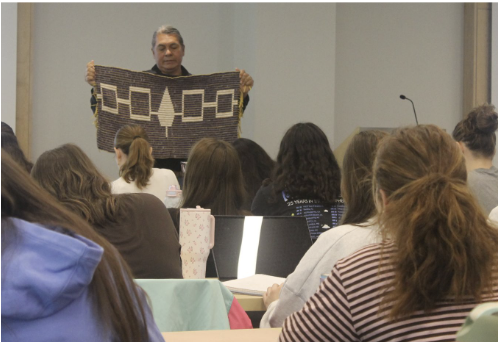
On September 10, 2026 a Native American speaker Dehowähda•dih, Bradley Powless, visited SUNY Geneseo and talked about how Native American culture was impacted by colonial America in New York State. Especially how it impacted families, cultures, lifestyles, and traditions.
One story that Powless presented was about the Onondaga Nation School. This was a grade K-8 school that was built in 1848 and was located in Native American territory. At the time the United States did not recognize the territory as being part of the nation and instead was its own entity with its own government. Nevertheless the school was operating and the children who attended were benefiting from the resources that it provided them. Later on there was an incident and the school was burnt down. In 1939 a different school was created in replacement of the old Onondaga Nation School. This new building was specifically built with brick to prevent it from being burned down. Although this school was operating like any other grade school it still faced some challenges outside of its reach. One being isolated from New York State, it took until 1970 for NYS to recognize the school as a part of the state but this did not necessarily fix the problem but created new ones along the way.
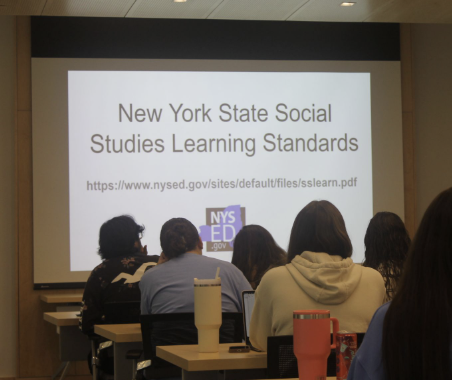
Ever since Onondaga Nation School was recognized by the state of New York the school was not able to recognize their formal Native American identity and was forced to adopt a colonial American culture instead. As the school gained a new identity under NYS they had to abide by their standards as well. This included being taught the history of New York State and being taught civics, citizenship, and government. This sparked outrage amongst the students especially from the highschoolers who attended the school. The high schoolers refused to go to school unless the school changed their way of teaching.
Another challenge that the community faced was not being able to stay in the Onondaga community and be taught by fellow Onondaga people. The students of Onondaga had to be relocated to colonial America. Surrounded by unfamiliar faces and culture, it was bound by time that they would lose the essence that made them who they once were. Once those students eventually came back to Onondaga they lost the ability to hunt and fish. They also forgot their cultural practices and rituals and how to speak their language. They forgot how to be Onondaga.
Although people from the Onondaga community fought to keep their schools and culture relevant as the rest of New York State was going through changes there was only so much they could do. In the mix of things the younger generation, the future leaders, lost the very identity that tied them close to the community that they were meant to lead. However, the Onondaga Nation School was not forgotten by colonial Americans and recognized as its own identity under New York State. In addition, the then younger generation was brought into colonial America not as enemies but as allies who were intrigued by the culture and ready to learn. In the end, Powless left us with this question. Was this a cultural setback or intellectual upgrade for the Onondaga community?
0 Comments